Flipper Zero On A Budget: Build Your Own IR And 433 MHz RF Wi-Fi Remote


Flipper Zero is popular because it places several wireless tools inside one portable device. This project follows the same experimental idea on a smaller budget: a D1 Mini captures one infrared command and one compatible fixed-code 433 MHz RF command, saves them in memory, and replays them from a private web dashboard.
It is not a full Flipper Zero replacement, but it is a practical way to learn IR, RF, MQTT, embedded storage, and secure web control in one build.
Use this device only with equipment you own or have explicit permission to test. The RF section is intended for simple fixed-code ASK/OOK remotes. It does not decode or bypass rolling-code access systems.
This article includes a step-by-step device assembly guide, wiring schema, D1 mini and website code, hiveMQ instructions.
Key Takeaways
The D1 Mini stores one IR signal and one compatible 433 MHz fixed-code RF signal after power is removed.
A secure server-side relay keeps HiveMQ credentials out of the browser and public website code.
The finished power system uses a removable 18650 battery, two-pin switch, and regulated 5 V boost converter.
The guide includes exact wiring, voltage-divider values, code, testing checkpoints, and solutions to common power problems.
What We Are Building
The device has four jobs:
Connect to Wi-Fi and HiveMQ Cloud.
Capture an IR or compatible 433 MHz RF signal when the website requests it.
Save the captured signal in the ESP8266 EEPROM area.
Replay the saved signal when you press a button on the private dashboard.

An OLED shows whether Wi-Fi and MQTT are connected and whether an IR or RF signal is stored.
The website never connects directly to HiveMQ. Its server-side API reads the credentials from protected environment variables and sends only approved commands.
Parts You Need
Part | Quantity | Purpose |
 | 1 | Main controller, Wi-Fi, and EEPROM storage |
 | 1 | Connection and capture status |
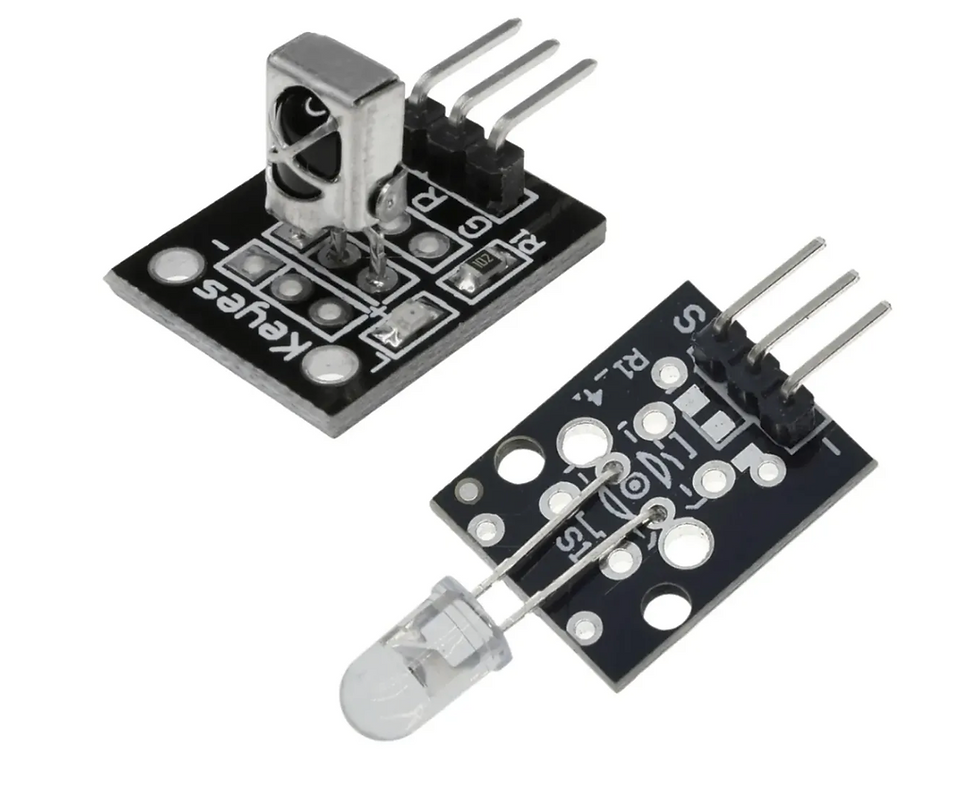 | 1 | Captures remote-control signals & Replays stored IR signals |
 | 1 | Captures compatible fixed-code RF signals & Replays compatible RF signals |
5 kΩ resistor marked 5K or 502 | 1 | Upper part of RF data voltage divider |
10 kΩ resistor marked 10K or 103 | 1 | Lower part of RF data voltage divider |
 | 1 | Reduces power dips during transmission |


